11630 SW 97 Street, Miami, Florida 33176, US
 +1-786-628-7980
 Sign Up/Sign In
  11630 SW 97 Street, Miami, Florida 33176, US
Law firms, legal tech companies, and specialized legal businesses spend up to $3000 on law firm public relations to secure high-trust exposure, attract corporate counsel and managing partners, and generate new business.
After 48 hours, a general news wire showed some pick-up placements and estimated impressions. However, when the company’s team examines their website analytics and CRM, there are no qualified business inquiries. This is the $3,000 PR Drain.
General newswires rely on vanity metrics such as automated traffic and syndication links on local television affiliate websites, channels where high-value decision-makers are unlikely to engage. For legal companies competing for high-value contracts and institutional trust, this wide distribution can waste valuable marketing.
This guide shows you how to avoid that loss.
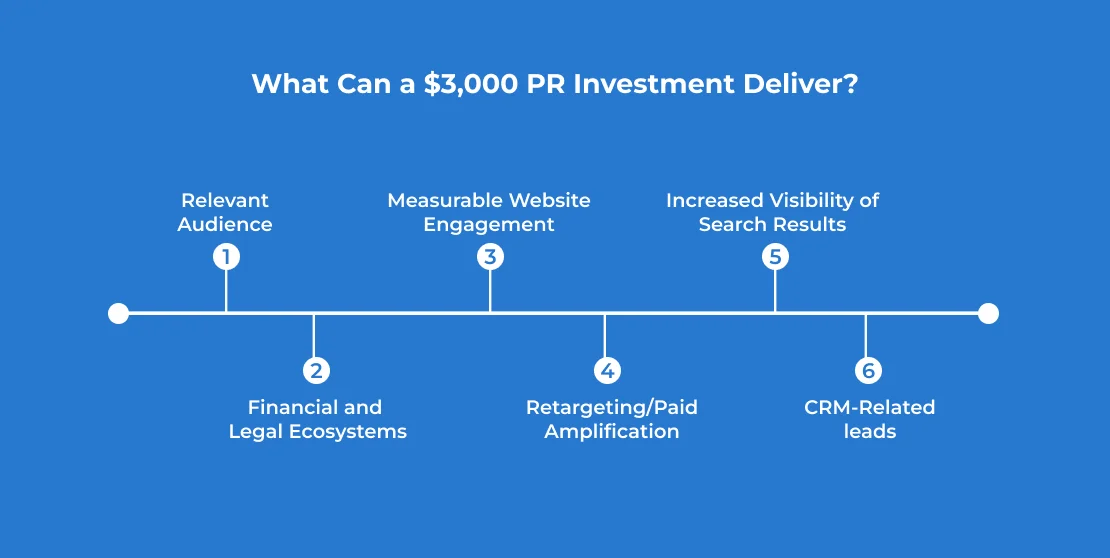
If you want to establish a legal brand, PR’s worth is not limited to a set of syndicated URLs. An effective law firm public relations program should be focused on:
It is not about how many people were aware of the news release. It is about whether they were the right people who saw it and the next step.
The main problem is in the structure of large press release networks designed for mass broadcasting. For high-value legal brands, audience contextualization is the most important factor.
A press release viewed by 40,000 general consumers produces zero commercial value for a legal tech brand. A release placed directly in front of 500 general counsels creates an enterprise pipeline.
These problems make generic distribution unsuitable for legal sector brands, which is why public relations for law firms requires a different approach:
You can turn our press releases into a pipeline engine for B2B through iCrowdNewswire’s Legal Newswire because this combines guaranteed placements on Law.com and LexisNexis, along with Google AdTech, to place your announcement directly in the hands of jurists and legal professionals.
|
Distribution Metric |
General Newswire |
iCrowdNewswire Legal Newswire |
|
Primary Placements |
Local TV, Radio news stations, and broad web aggregators. |
LexisNexis, Thomson, Above the Law, Financial databases. |
|
Audience Profile |
Public, automated crawlers, retailers. |
Corporate Counsel, Managing Partners, Legal Tech Buyers. |
|
AdTech Amplification |
Feeds from static wire; no cost-based amplification. |
Google AdSense & paid media campaigns (7 custom banner creative sizes). |
|
Targeting Precision |
A broad geographic or national scattergun strategy. |
Zip code and practice area targeted audience segmentation based on AI and demographics. |
|
Verification & Analytics |
The impression count of PDFs that are not verified. |
Google Analytics verified performance and Master Distribution Reports. |
What differentiates high-intent PR for law firms from traditional distribution is not just where the release is distributed, but what happens after the release gains exposure. Legal PR campaigns must provide measurable steps from engagement to visibility and eventually potential business opportunities. It is a matter of combining appropriate public exposure, legal and financial system positioning, with quantifiable web-based engagement, retargeting, and paid advertising in search visibility and leads attributable to CRM.
If you want to determine the real value of investment, B2B growth executives must go beyond cost-per-release metrics that are merely a surface indicator and examine the mathematics of commercial intentions for qualified pipelines.
Legal brands willing to pay $3,000 for a broad release may end up paying more for exposure that delivers little commercial value. The cost of a broad release instead of a targeted distribution forces marketers to provide a subsidy to a population that is unlikely to change and leaves out the channels that are concentrated where actual buying decisions are made.
The actual measurement framework must be able to go beyond impressions and address six business questions:
These are the measures that allow you to distinguish the quantity of distribution and the genuine B2B value in marketing.
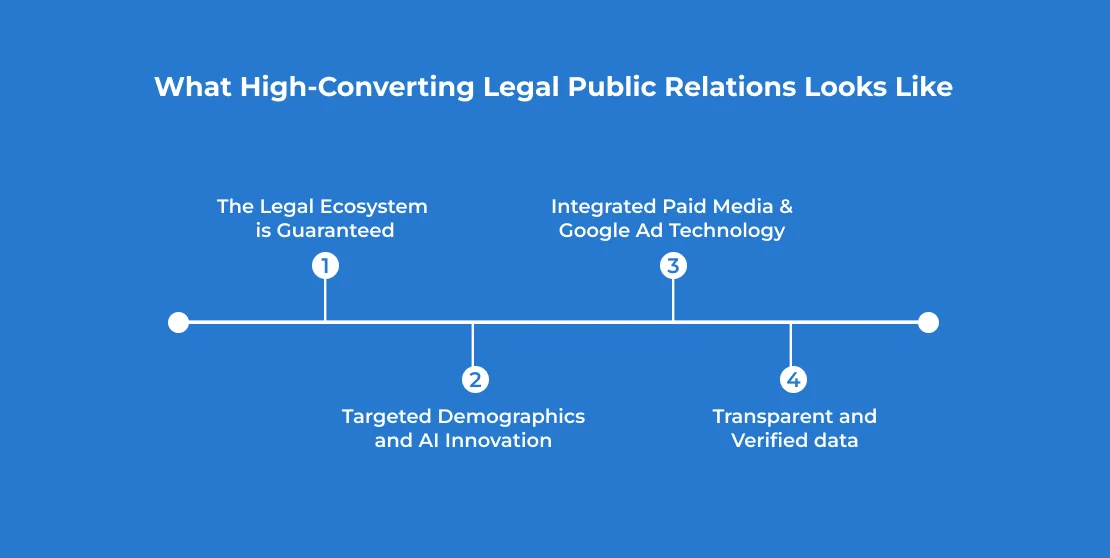
To reduce wasted spending, legal firms are moving away from broad distribution and focusing on targeted media distribution strategies, or law firm digital PR services, that reach the right audience. Made specifically for the legal industry, Legal News turns your press releases into B2B opportunities.
Simply announce an event and then build a measurable path from public exposure to website engagement, retargeting, and paid exposure for a long time. This creates a measurable path from search discovery to qualified inquiries and CRM-attributable leads.
In short, when your news releases are not reaching lawyers, corporate counsel, key decision-makers, or law firm buyers, then your marketing budget will be subsidizing vanity in law firm public relations. In the modern B2B legal world, generic reports on syndication are not an alternative to a genuine commercial pipeline.
You should stop judging PR by the quantity of unreliable links and instead measure the quality of PR by the quality of the domain, audience density, and income impact. A successful law firm public relations campaign addresses three issues, such as:
If the answer to these questions is not clear, the impact count is not enough to be regarded as an efficient PR strategy.

A press release for a law firm provides legal permission to publish mergers or major news on the internet. Search engines and AI software read these releases to help people find the company you represent. They provide reporters with easy quote templates that they can incorporate into their reports.
Wire services send hundreds of posts every single day. Yours will be lost in the crowd. They do not send news directly to specific reporters who actually report on legal issues. The big newsrooms view the general wire email messages as junk mail. As a result, journalists are not likely to receive them.
The voluminous legal language is difficult for journalists and readers to absorb quickly. Lawyers keep their primary message for last, and news articles need an upfront announcement of the major news. A considerate legal style is dull and uninteresting, which makes quotes unusable in a compelling story.
Yes, but only if they are sent directly to specific journalists instead of relying on wire blasts. They are excellent for instructing AI about your business and showing clients expected results. The best way to use them is to compose your content in simple English that is clear, concise, and brief, with engaging quotations.

You may like these post too