11630 SW 97 Street, Miami, Florida 33176, US
 +1-786-628-7980
 Sign Up/Sign In
  11630 SW 97 Street, Miami, Florida 33176, US
Journalists are bombarded with thousands of press releases each day. But the majority are deleted within a few seconds, and not due to rude journalists, but because of a lack of time. Once your news release appears in their inboxes, you will be competing against breaking news, large brands’ exclusive stories, and personal pitches that have tight deadlines. If it does not demonstrate immediate in terms of clarity and relevance, then it will soon disappear into the air.
This is the reason why the majority of press releases fail. If that’s been your experience, it is not your fault that you are good at public relations, and neither is your content dull. Most of the time, press releases do not fail because their content is weak, but rather because of excellent press release examples or avoiding common press release mistakes, and because you are not combining paid media with press releases.
So in this guide, we are going to walk you through:

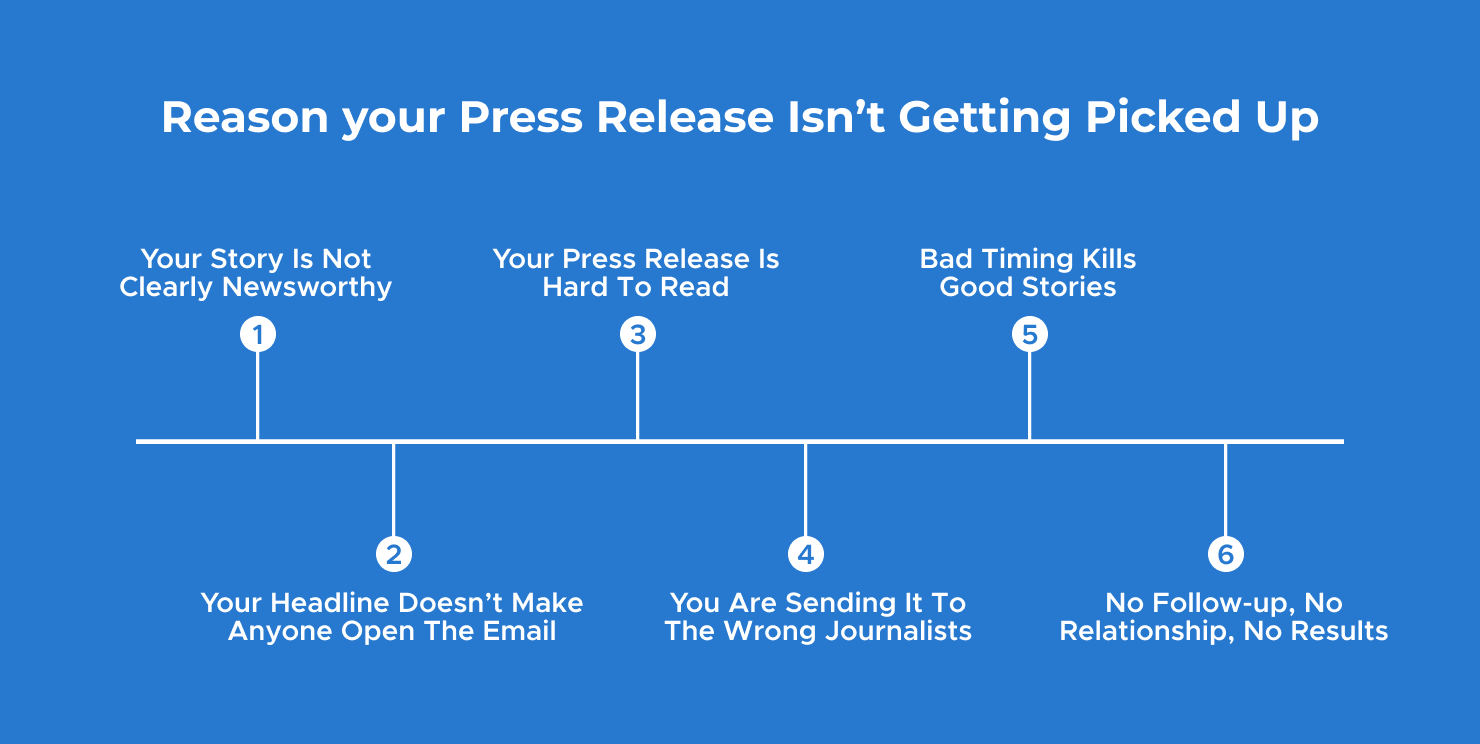
Most press releases do not fail because of bad news. Rather, they often fail due to small errors that go undetected by audiences. Many of these errors appear in bad press release examples and poorly written drafts. Here are a few reasons your press release might be going unread and how you can fix them.
Every achievement in your company is a milestone. That can be a partnership agreement or a product update. However, journalists do not prioritize internal milestones. Rather, they care more about stories that resonate with readers than internal milestones. When reviewing client drafts, this is often our first point of review, especially when fixing bad press releases.
A strong press release usually includes at least one of these:
If your press release simply mentions launching something new, it is not enough to compete with the best media releases that journalists prefer to cover.
Before you distribute anything, always review and refine the story angle. You should:
This alone increases pickup rates dramatically.
Your headline does 80% of the work. Unfortunately, most press releases fail here. Generic headlines, such as announcing new products or services can almost ensure their email will never get opened by potential recipients, especially when you are trying to submit a news release to busy journalists.
Journalists open emails that:
You must learn how to send a press release with headlines that attract attention and avoid the patterns seen in bad press release examples. Focus on:
Because if your email is not opened, nothing else matters.
Even once a journalist opens your email, another challenge is that they will not read every word carefully. But rather rapidly scan over what might look like an overwhelming wall of text. This is one of the biggest press release mistakes companies make when they try to release a press release without proper formatting.
A journalist-friendly press release:
Every press release you distribute is formatted for real newsroom reading behavior. You should:
Journalists do not just read our releases; they can publish them quickly, which increases your chances of coverage.
Press releases often fail due to outdated media lists. Many companies still rely on large, generic media lists that send the same release out at once. This approach leads to bad press releases being ignored, even when the story is good. An approach that does not work anymore because journalists only cover stories related to their beat.
Do not send your release to everyone. Only send it to the right people. And build industry-focused media targeting based on:
This alone is often the biggest reason our clients start seeing coverage after months of silence.
Timing can make or break even the best press releases. Even the best media releases can fail if they are sent at the wrong time. We have witnessed powerful stories go unread because they were sent on Friday afternoon. These are major holidays or breaking news events, and journalists may never even read them.
You should schedule distribution based on:
Your story lands when journalists are actually paying attention.
Lastly, remind journalists they need to follow up. Emails get lost. Stories go missing. That is why knowing how to send a press release properly and following up professionally is essential for long-term success and follow-up communications that address those challenges.
You should include professional media follow-up and relationship handling to:
This turns your press release from a one-time email into an actual conversation.
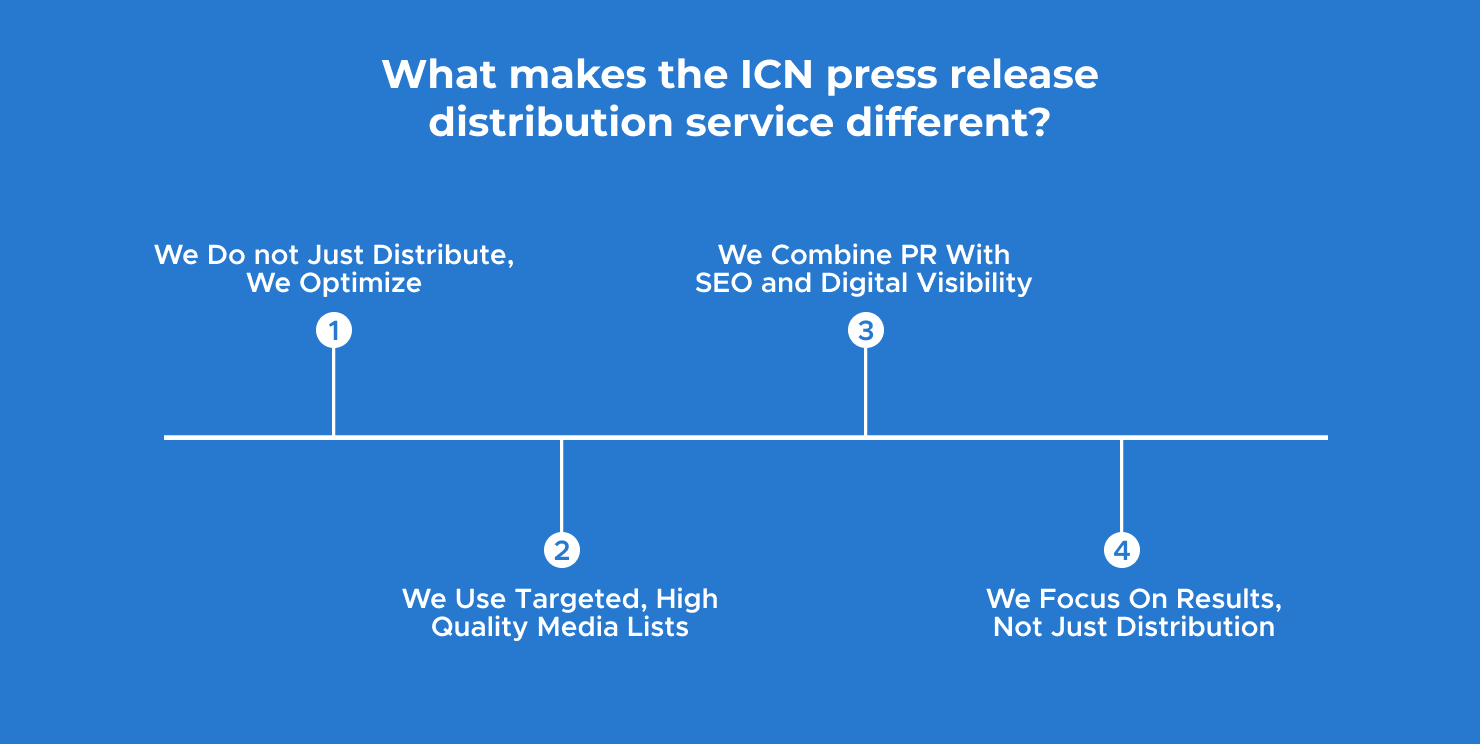
iCrowdNewswire generates higher open rates from journalists and media mentions in relevant publications. This increases brand credibility, referral traffic from news websites, stronger SEO and backlinks, and better visibility for product launches and announcements.
Before anything goes out, we help you:
This alone increases success rates.
Instead of mass blasting, we:
Better targeting equals higher open rates and more coverage.
Our press releases are not only written for journalists, but they are also written for:
This means your release can:
Most PR services ignore this, but we do not.
At the end of the day, what matters is not just that we sent your press release.
What matters is:
That’s why we provide:
So you can actually see the impact.
Inshort, the success of press releases does not depend on luck. It depends on avoiding common press release mistakes, learning from great press release examples, and using the right strategy when you send out a press release or submit a news release. When press releases fall short, it’s usually not because the news itself is not good enough. Most of the time, it is because the story was not presented correctly, the headline was not able to draw viewers’ interest, the content was not targeted to its intended audience, or the timing was not right.
Many times, companies miss small details that are the key to the effectiveness of marketing communications. These issues can be resolved with the right strategy and targeted distribution partners. Our team makes sure your press releases will not remain in your mailboxes. They are able to be used for media coverage, branding visibility, brand exposure, and even business growth.

You can get your press release picked up by:
A bad press release is often written more like an advertisement than a news article. This contains poor headlines, unclear messages, and over-promotion of the company. Most importantly it gives out to unqualified journalists, which is often ignored by journalists.
Yes, newspapers still accept press release but only those that are appropriate and well-written. Journalists pick stories that provide value to readers and fit their specific area of expertise. Strong stories that are targeted are able to get excellent coverage today.
An effective press release conveys the new information and the reason for it in the very first few lines. It uses simple language that grabs the attention of readers with compelling headlines, easy explanations, relevant information, or quotes, communicating with journalists at precisely the right time.
You can write a killer press release by:

You may like these post too