How to Use a Press Release During a Crisis: A Step-by-Step Guide
Every company is sensitive to an ultimate crisis, which might be brought on by data loss incidents, product recalls, unsuccessful social media incidents, operational issues, and so on. The way you respond during these events will decide your company’s prospects for the years to come.
You should use rapid communication channels to soothe the affected parties while safeguarding your branding quickly. A good method is to use press releases as a crisis communications handler. We have compiled this guide with a step-by-step method for creating and distributing news releases during moments of crisis.
What is a Crisis?
A crisis is anything that happens suddenly and might damage your business’s image. A crisis is the best way to see how much your brand is worth. When things are going well, it’s not hard for a strong brand to stay in high standing with the public. But if the crisis happens, it might entail everything from bad tweets that make your business appear unprofessional. Your warehouses might have problems with operations, money, or calamities.
Understanding the Role of Crisis Press Releases
Before we get into the details of how to use a crisis press release, we should look at the reasons why press releases in moments of crisis are an asset. The press release in these circumstances serves a variety of essential purposes. They include:
- Official Records: Press releases are the official declaration of your company and are therefore the official document. The press release provides journalists, customers, and employees with a single message that everyone can use. It helps to stop fake news from being spread.
- Demonstrates control: This is a demonstration of control. Sending out a timely press release shows your business is aware of the situation and how to deal with it. This proactive strategy can improve confidence and decrease anxiety.
- Provides important information: You are the only person who can deliver important information. They can ask you about how the incident occurred, what information you are aware of, and how you are fixing the issues.
- Shows empathy: A properly written crisis announcement conveys your concern for those affected. Being aware of how something can affect people, employees, or even the entire community is a crucial step to repairing relationships.
An emergency press release is not just about getting things fixed. Instead, it’s about expressing your feelings responsibly and establishing the tone for future interactions, and it aids people’s healing.
Steps To Follow While Using a Crisis Press Release
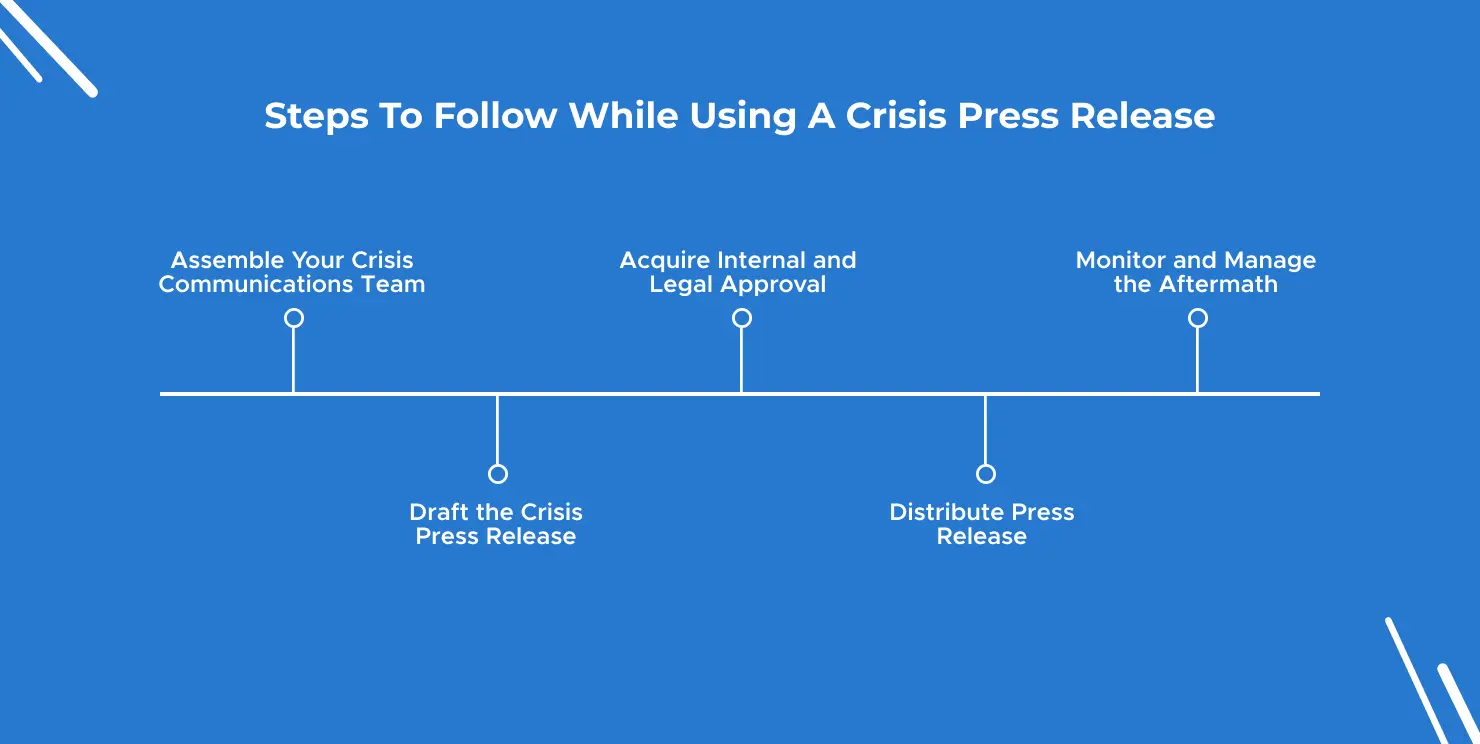
You should follow these steps while creating a crisis press release.
Step 1. Assemble Your Crisis Communications Team
Firstly, if an emergency occurs within your business, you should prepare a quick action plan in place before mishaps occur. The first step should consist of bringing the emergency communications team to help you make crucial decisions quickly and keep the information flowing during a crisis. The best crisis communications team will include:
- Team Leader: This refers to a leader of a team, usually consisting of an executive or the head of communications. The latter has the ultimate decision-making responsibility for approach and message decisions.
- Expert in PR: Public relations (PR) Specialist in Public Relations (PR) or group will be responsible for the creation of press releases, interacting with media professionals, and evaluating the coverage.
- Lawyers: Legal counsel offer valuable services through monitoring the interactions that occur outside of their company in order to ensure they do not have legal implications due to interactions outside their firm. Their guidance is not contested and shouldn’t be discussed.
- Experts on the subject: Experts in the field at hand to give solid information about as well as the underlying cause and the solution to a crisis (for instance, data breaches or product defects).
- Executive Spokesperson: The executive spokesperson will be the spokesperson for your company in the event of a crisis, typically the CEO or a higher-ranking executive. In the course of their job, they must be trained in media to prepare them to answer difficult inquiries from journalists.
Step 2. Draft the Crisis Press Release
Once you have got all the data you need, it’s time to create the crisis press release. An emergency press release needs a particular tone and concentration of content, but it follows a standard format. For optimal results, it must be concise, brief, as well as open in both its appearance and tone.
- Include details and contexts: Include a context and details to provide more detail on what has been happening so far, and also to highlight any other facts or information about how the situation became apparent.
- Accept the Impact: Be compassionate towards those who have suffered injuries. Simple phrases such as “We apologize for any worry and distress this issue may cause our customers” will go a long way in demonstrating your concern for the health of those injured.
- Outline the steps being taken: Define the actions your company is taking to correct the issue, and conduct an investigation. Cooperating with authorities? Offer aid or assistance directly? Be precise. Make sure you are specific.
- Make clear instructions: Give straightforward, easy-to-follow directions when customers or other parties want to do anything, like changing a password or returning items.
- Spokesperson Quote: Use the opportunity to make your quote more personalized by adding an excerpt from a person you’ve who has been chosen to be an official spokesperson (such as the CEO ). Their words must support the primary aspects while demonstrating they are aware and reiterating the company’s promises about solving any issues that were discussed during the discussion of the issue.
Step 3: Acquire Internal and Legal Approval
The process should never be missed; it’s essential. The entire team involved in the crisis, including your attorney, is required to review and accept the announcement before the release to ensure that the statement doesn’t openly admit to blame that later could be utilized against them or render the corporation liable when it comes to court cases.
It can be difficult to assume responsibility in the face of legal and PR groups that are against transparency. Finding a compromise may be more challenging, and finding a compromise between legal guidance and public relations advice, while also being accountable, and maintaining a peaceful response time, is essential to provide timelines for comments and approvals.
Step 4. Distribute Press Release
It is essential to distribute the press release immediately following being it is approved. Several channels need to be available for putting it in circulation, as well as making its existence public.
- News Wire Provider: When choosing a service for press release distribution, such as icrowdnewswire to distribute your announcement, be sure the release is distributed to many newsrooms, journalists, as well as media outlets in both the US and internationally, to maximize speedy diffusion. It will be distributed quickly.
- Share on social media: Share the URL of the announcement on all the social media platforms of your business, like Facebook, Twitter, and LinkedIn. Your content on these sites will be brief but informative, brief overviews, which encourage users to look through the entire release for more details.
- Send to the right people: The news release should be sent directly to the appropriate people, such as investors, employees, big clients, and business partners. Be sure to inform your employees before informing the media.
- Targeted media outreach: Send your news release directly to editors and reporters who have covered your field or your company before via wire service, and then via email in order to ensure they read it and pay attention.
Step 5. Monitor and Manage the Aftermath
Press releases are just the first step in addressing the issue. After it is distributed, you must switch to the monitoring and management mode so that you can effectively respond to the issue.
- Monitor Media Reporting: Use devices to keep track of how your story is being covered by the media. Do reporters cover the key details correctly? Is the information they provide correct? If they are reporting false information, ensure that your media contacts get in contact with the reporters in order to make corrections promptly. If false or incorrect reports are discovered, contacts should be initiated between media contact persons to fix the errors quickly and effectively.
- Make sure you are careful with social media: In dealing with feedback and questions on your social media sites, ensure that you handle them in a proper manner. Make sure you have answers ready for frequently asked questions that have been approved. Send customers who have complex or simple issues directly to the customer support channels instead of engaging them publicly in online debates.
- Prepare for questions from reporters: The media contact you have should be prepared to respond whenever it becomes available. Your spokesperson needs to be ready for an interview.
- Periodic Updates: A single press release will not serve when things change, and if you gain more knowledge, you can make additional remarks whenever necessary. This shows your commitment to transparency, as well as demonstrating that the situation remains in your control.
Conclusion
In short, a crisis forces companies to undergo an extensive character assessment. You must not only manage the story with ease using the release of press statements, but you also need to show a responsible, honest behaviour that shows genuine concern for both stakeholders and consumers alike. You should make an honest response, make yourself available when everything has occurred through difficult times, and build trust over time by getting your staff prepared.
A press release will help you manage the situation by being transparent and truthful with people who are affected, and re-establish confidence. However, you need a proper manner to release news in a crisis (ie, how it should be written, what tone the release should be delivering) as well as knowing the best times and ways to be utilized effectively.

Frequently Asked Questions
What is the primary purpose of a press release during a crisis?
Crisis press releases aim to inform the public and media quickly and accurately. Keeping communication clear and accurate reduces rumors and misinformation. Sending key messages directly to stakeholders helps organizations maintain their reputation and inform them of developments.
What are the 5 Ps of a crisis?
The 5Ps of a crisis include:
- Predict
- Prevent
- Prepare
- Perform
- Post-action
What is the crisis response press release?
Crisis response press releases address the issue directly. It usually includes what caused the crisis, how the organization responded, what was done to improve things, and what stakeholders should do next. The release aims to calm the public, clarify things, and demonstrate the organization’s transparency.
What is the role of PR in a crisis?
Crisis PR makes sure that communication between the organization and its stakeholders is smooth. People who work in public relations make sure that the public and the media understand the crisis clearly and consistently. They control how people see the organization, keep its reputation safe, and share correct information.
 11630 SW 97 Street, Miami, Florida 33176, US
 +1-786-628-7980
 Sign Up/Sign In